

Last updated April 2026 · ~7 min read
Every April, the same thing happens in Canadian households: winter coats come off, and suddenly there's more dog or cat hair on the couch than on the pet. Spring shedding is normal, it's healthy, and with the right tools it's manageable — but the tool you reach for matters a lot more than most owners realize.
This is PetMax's 2026 guide to surviving spring shed for Canadian dogs and cats. We'll cover why shedding spikes in April and May, how to pick the right tool for your pet's coat type, and exactly which products we stock and recommend.
Why do dogs and cats shed more in spring?
It's all about photoperiod — the amount of daylight. As the days get longer, your pet's body flips a hormonal switch and starts shedding the dense winter undercoat to make room for a lighter summer coat. This isn't just cosmetic: trapped winter undercoat can mat, cause skin irritation, and hold moisture against the skin, which in Canadian spring dampness is a recipe for hot spots.
The two heaviest shedding seasons are April–May (winter coat out) and October (summer coat out). Double-coated breeds — huskies, shepherds, golden retrievers, Labradors, collies, corgis, and their mixes — shed the most dramatically, and need the most help. Single-coated breeds like poodles, bichons, and schnauzers shed less but still benefit from weekly brushing.
The 4 tools every multi-brush household should own
You don't need a drawer full of grooming gadgets. You need four things, each for a specific job.
1. The deshedder (the workhorse)
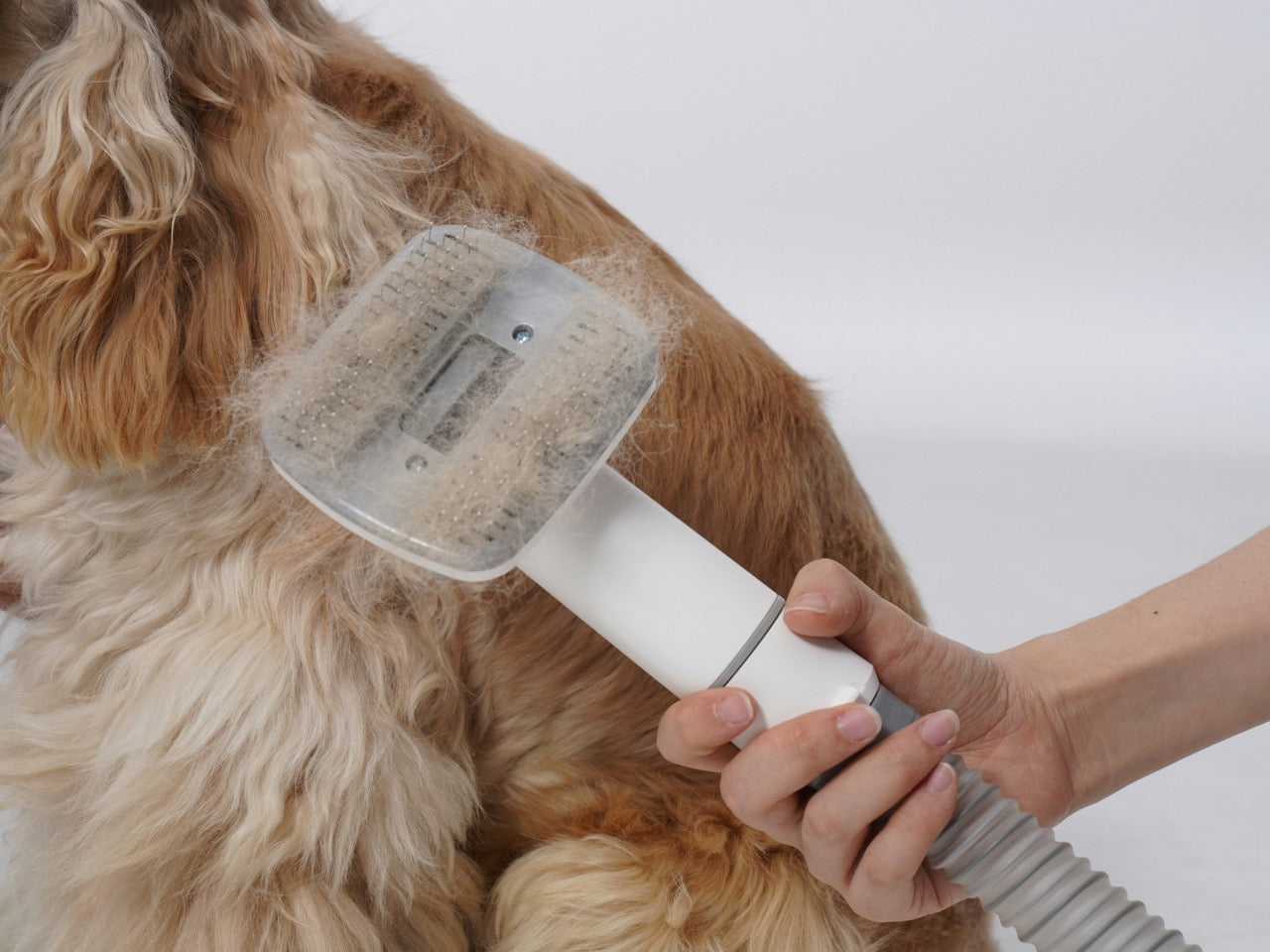
A deshedder has fine metal teeth that reach down through the outer coat to grab loose undercoat without cutting the guard hairs. This is the single most effective tool for heavy shedders. Use it once or twice a week during peak shedding season, for 5–10 minutes per session — do not overuse it or you'll irritate the skin.
Le Salon Essentials Deshedder for Dogs — our top pick for dogs with a dense undercoat. Shortens shedding season by weeks if used consistently.
2. The undercoat rake (for double-coated breeds)
If your dog is a husky, shepherd, malamute, collie, or corgi — anything with a thick woolly underlayer — a rake is your best friend. It has wider-spaced, rounded teeth designed to penetrate deep into the coat and pull out loose fluff without yanking the living hair.
- Le Salon Essentials Double Undercoat Rake — the heavy-duty option, dual-row teeth for maximum lift.
- Le Salon Essentials Single Rake — Short Tooth — a gentler single-row option, good for medium coats.
- Le Salon Essentials Shedding Comb — fine-toothed comb that pairs well with the deshedder for finishing.
3. The slicker brush (the daily go-to)
Slicker brushes have bent wire bristles on a flat head, and they're the most versatile tool in the grooming kit. Use them daily to keep tangles from forming, to distribute skin oils through the coat, and to catch loose hair before it ends up on your couch. Slickers work on virtually every coat type.
- Le Salon Essentials Slicker Brush for Dogs
- Le Salon Essentials Cat Slicker Brush — specifically designed for feline skin sensitivity.
- Le Salon Essentials Cat Rubber Slicker Brush — the gentlest option for shorthaired cats and kittens who won't tolerate wire bristles.
4. The rubber curry brush (for short coats and massage)
For short-coated dogs like Labs, beagles, boxers, and pit bull types — and for cats who love being handled — a rubber grooming brush is surprisingly effective. The rubber nubs grab loose hair, stimulate skin circulation, and most pets genuinely enjoy the massage-like sensation.
- Le Salon Essentials Rubber Grooming Brush
- Le Salon Essentials Rubber Grooming Handle Brush — same tool with a handle for longer grooming sessions.
- Le Salon Essentials Cat Round Rubber Grooming Brush — the cat version.
Shop the full Shedding Season Essentials collection →
Bath-time tools that help with shedding
A warm bath with the right shampoo loosens dead undercoat and makes brushing dramatically more effective. The rule: bathe, brush while damp, blow dry (or air dry), then brush again. Two brushes sandwiching a bath will pull more loose hair than ten brushes on a dry coat.
Shampoos for shedders
- Le Salon Soothing Oatmeal Shampoo — oatmeal calms itchy shedding skin and is safe for weekly use during peak season.
- Le Salon Hypoallergenic Shampoo — unscented, sensitive-skin formula for dogs who react to fragranced shampoos.
- TropiClean OxyMed Hypoallergenic Shampoo — another great hypoallergenic option with added oxygenating cleansers.
- TropiClean Watermelon 2-in-1 Shampoo & Conditioner — smells like summer, conditions in one step to reduce coat breakage.
- Wellmark Aloe & Oatmeal 2-in-1 — Canadian-made, two-step-in-one bottle.
Between baths
- TropiClean Waterless Deep Cleaning Shampoo — for dogs who hate water. Spray, massage, towel off.
- Le Salon Soothing Oatmeal Dog Wipes — quick wipe-down for paws, belly, and face between full baths.
The cat version of shedding season
Cats don't spring-shed as dramatically as dogs, but they do blow coat twice a year and the result often shows up as hairballs. The #1 thing you can do for a shedding cat is help them remove loose hair before they groom it off themselves. A five-minute brush-out two or three times a week can dramatically reduce hairball frequency.
- Catit 2.0 Self Groomer — stick it to a wall corner and your cat will groom themselves on it. Surprisingly effective for the right cat.
- Catit Grooming Kit — Long Hair — a complete kit built specifically for Persian, Maine Coon, Ragdoll, and similar breeds.
- Catit Grooming Kit — Short Hair — for DSH, DMH, and other shorter-coated cats.
A realistic shedding-season routine
- Daily (2–5 minutes): Slicker brush over the coat to catch loose hair before it falls.
- Twice a week (10 minutes): Deshedder or undercoat rake session on the back, sides, haunches, and chest. Work with the grain. Stop when you stop pulling significant loose coat.
- Every 2–4 weeks: Bath with oatmeal or hypoallergenic shampoo. Brush while damp, air or blow dry, brush again.
- Weekly: Wipe ears, trim nails, check paw pads for foreign objects picked up on walks.
- Year-round: Vacuum, lint roll, repeat. It gets easier in a few weeks.
Frequently asked questions
How do I know if it's normal shedding or a skin problem?
Normal shedding is even across the coat, the skin underneath looks healthy, and there's no intense scratching. Warning signs that mean you should talk to a vet: bald patches, red or flaky skin, sores, heavy dandruff, intense itching, or a sudden change in shedding pattern.
Will a shave reduce shedding?
No — and for double-coated breeds it can actively hurt. The undercoat is what insulates against both cold and heat; shaving a husky or shepherd can cause the coat to grow back patchy and makes them worse at regulating temperature. Brush, don't shave. (Single-coated breeds like poodles do fine with clipper cuts — it's the double-coated breeds you need to leave alone.)
What about diet — does food affect shedding?
Yes, meaningfully. A diet with good omega-3 content (from fish oil, flaxseed, or krill) produces a shinier coat and noticeably less breakage. Canadian brands like Nutrience, Acana, Orijen, and Boréal all include omega sources. If your dog's coat is dull and shedding excessively year-round, look at the food first.
Is the Furminator the best deshedder?
Furminator is a well-known brand but the Le Salon deshedder does the same job at a lower price point and is stocked in Canada. Both work on the same principle — fine metal teeth that reach the undercoat.
How do I get my dog to tolerate brushing?
Short sessions, positive reinforcement, and start at the shoulders (a neutral zone) before working toward sensitive areas like the belly and hind legs. A few licks of peanut butter smeared on a silicone mat during brushing works wonders for reactive dogs.
The bottom line
Three tools will get you through any shedding season: a slicker brush for daily maintenance, a deshedder or undercoat rake for the heavy lift, and a decent oatmeal shampoo for the bath. Add a cat-specific brush if you have a cat. That's it.
PetMax.ca is a Canadian-owned pet supply retailer based in the GTHA. We've been helping pet owners since 1993 and ship across Canada — free shipping on orders over $89.

Share:
The Ultimate 2026 Flea & Tick Prevention Guide for Canadian Dogs & Cats
Best Hip & Joint Supplements for Senior Dogs in Canada: 2026 Mobility Guide