

Last updated April 2026 · ~9 min read
It's April, the snow is gone early this year, and Canadian ticks are already climbing onto blades of grass looking for a ride. Spring 2026 is trending warmer and milder than average, which means flea and tick season has started earlier than most owners expect. If you wait until you find a tick on your dog or a flea on your couch, you're already a month behind.
This is PetMax's 2026 guide to keeping Canadian dogs and cats parasite-free. We'll cover what actually works, which products we carry (and why), the one Canadian regulatory quirk you should know about, and the single most important safety rule most owners don't realize until it's too late.
Why flea and tick prevention matters in Canada
This isn't just about itchy pets. Fleas and ticks carry real disease:
- Lyme disease from black-legged (deer) ticks — now established across southern Ontario, Quebec, and the Maritimes, and expanding north every year.
- Anaplasmosis and ehrlichiosis — tick-borne infections that cause fever, lethargy, and joint pain.
- Tapeworms — fleas are the intermediate host; one swallowed flea during grooming can mean a tapeworm infection.
- Flea allergy dermatitis (FAD) — the #1 cause of skin problems in dogs and cats. A single bite can trigger weeks of intense itching in an allergic pet.
- Anemia in kittens and puppies — a heavy flea infestation can literally drain a small animal of blood.
Climate change has extended Canada's flea and tick season dramatically. In southern Canada, ticks can be active any day above 4°C — which now includes most of the winter, not just summer.
The Canadian regulatory quirk (why you won't find NexGard or Bravecto here)
If you've read American flea and tick guides, you've probably seen oral chewable brands like NexGard, Bravecto, Simparica, and Credelio. These are excellent products — but in Canada they are prescription-only, available exclusively through your veterinarian, not through retailers like PetMax. That's a Health Canada regulation, not a PetMax stocking decision.
The good news: the topical monthly treatments we do carry — Advantage II, K9 Advantix II, K9 Praventa 360, Praventa, and Zodiac — are Health Canada-approved, highly effective, and available without a prescription. For the vast majority of Canadian dogs and cats, they get the job done.
⚠️ Critical safety rule: NEVER use dog flea products on cats
Many effective dog flea and tick products (including K9 Advantix II, K9 Praventa, and Zodiac Powerspot) contain permethrin or related pyrethroids. Permethrin is safe for dogs but highly toxic to cats — it can cause tremors, seizures, and death. Every year, cats die in Canadian households because an owner applied a dog product to their cat, or because a cat groomed a recently-treated dog. Rules: (1) only ever use cat-labelled products on cats, (2) keep dogs and cats separated for 24–48 hours after applying permethrin-based topicals to the dog, and (3) if you suspect exposure, call your vet immediately.
How to choose the right flea and tick product
Four factors drive the choice:
- Species — dogs and cats need different products (see safety rule above).
- Weight — topicals are dosed by body weight. Using the wrong size is either ineffective (too small) or potentially unsafe (too large).
- Parasite coverage — some products kill fleas only; others also cover ticks, mosquitoes, chewing lice, and biting flies. If you walk your dog in wooded or grassy areas, pick a tick-inclusive product.
- Lifestyle — indoor-only cats need less coverage than outdoor cats; city dogs need less than country dogs.
The 2026 flea and tick toolkit for dogs
1. Monthly topical — all-in-one (fleas + ticks + mosquitoes)
The gold standard for Canadian dogs is K9 Advantix II. It repels and kills fleas, ticks (including the deer ticks that carry Lyme disease), mosquitoes, biting flies, and chewing lice — a single monthly application covers everything the Canadian outdoors can throw at your dog. Pick the size matched to your dog's weight:
- K9 Advantix II — Small Dogs (under 10 lb / 4.5 kg)
- K9 Advantix II — Medium Dogs (11–20 lb / 4.5–9 kg)
- K9 Advantix II — Large Dogs (21–55 lb / 9–25 kg)
- K9 Advantix II — X-Large Dogs (over 55 lb / 25 kg)
Reminder: K9 Advantix II contains permethrin. Safe for dogs, deadly for cats — keep them separated while the product dries.
2. Monthly topical — fleas only (if ticks aren't a concern)
If you live in a flea-prone but low-tick area, or you share a household with cats and want to avoid permethrin entirely, Advantage II is the safer pick. It kills fleas at every life stage (eggs, larvae, adults) and breaks the infestation cycle within 12 hours. No permethrin, safe around feline housemates:
- Advantage II — Small Dogs
- Advantage II — Medium Dogs
- Advantage II — Large Dogs
- Advantage II — X-Large Dogs
3. Alternative monthly topicals — K9 Praventa 360 and Zodiac
If you prefer a different brand or price point, Canadian-made K9 Praventa 360 and Zodiac Powerspot are solid alternatives that cover fleas, ticks, and mosquitoes for dogs:
- K9 Praventa 360 — Small Dogs (under 4.5 kg)
- K9 Praventa 360 — Medium Dogs (4.6–11 kg)
- K9 Praventa 360 — Large Dogs (11–25 kg)
- K9 Praventa 360 — X-Large Dogs (over 25 kg)
- Zodiac Powerspot — Small Breed Dogs (under 13.6 kg)
4. Shampoos and sprays — for active infestations
If you find fleas on your dog today, a monthly topical will clear them in 24–48 hours — but you can speed up the kill with a shampoo or spray that gets results on contact:
- Zodiac Pet Flea & Tick Shampoo — kills on contact, rinses clean.
- Zodiac Pet Flea & Tick Spray — spot treatment for collars, bedding, and hot spots between baths.
5. Natural and mechanical options
Not everyone wants a chemical topical. For low-risk dogs, walks in urban parks, or owners who prefer a belt-and-suspenders approach alongside a topical:
- Tickless Classic Pet Ultrasonic Tick & Flea Repeller — clips to the collar and emits an ultrasonic pulse fleas and ticks avoid. Safe for cats AND dogs (one of the few cross-species options), chemical-free, lasts up to 12 months per battery.
- Le Salon Essentials Flea Comb — a fine-toothed comb is surprisingly effective at pulling fleas and flea dirt out of a dog's coat. Great for post-walk tick checks and for confirming whether that itching is fleas or allergies.
Shop the full Flea & Tick Prevention collection →
The 2026 flea and tick toolkit for cats
Cats are trickier than dogs for three reasons: they're smaller and more sensitive to chemicals, they groom constantly (so they ingest whatever you put on them), and they can't tolerate permethrin — the active ingredient in most dog products. Always read the label, always use a cat-specific product.
1. Monthly topical — the easiest category
All of these are cat-safe, permethrin-free, and kill fleas at every life stage:
- Advantage II — Small Cats (under 9 lb / 4 kg)
- Advantage II — Large Cats (over 9 lb / 4 kg)
- Praventa — Small Cats (2.3–4 kg) — Canadian-made alternative to Advantage II.
- Praventa — Large Cats (over 4 kg)
- Zodiac Infestop — Small Cats (4 kg and under)
- Zodiac Infestop — Large Cats (over 4 kg)
- Zodiac Spot On Cat & Kitten — budget-friendly option that covers both adults and kittens.
2. Kittens — start earlier than you think
Kittens can carry fleas as soon as they're weaned, and a heavy infestation can make a small kitten dangerously anemic. Start prevention early with a kitten-safe product:
- Advantage II — For Kittens (1.3–4 lb / 0.6–1.8 kg)
- Zodiac Spot On Cat & Kitten
- Zodiac Cat & Kitten Flea & Tick Spray — for spot treatment and bedding.
3. Natural and mechanical
Cats are great candidates for mechanical prevention because they bathe themselves and many won't tolerate any topical:
- Tickless Classic Ultrasonic Repeller — clips to a breakaway cat collar, chemical-free, one battery lasts months.
- Le Salon Essentials Cat Flea Comb — a weekly comb-through during flea season catches problems before they escalate.
Shop the full Flea & Tick Prevention collection →
When should I start prevention in Canada?
The honest answer for most of southern Canada: now, if you haven't already. With 2026's mild spring, ticks are active any day the ground temperature is above 4°C — which in places like Toronto, Montreal, Halifax, and Vancouver means March through November at minimum.
If your pet had fleas last fall or you had any exposure during the winter, year-round prevention is the only thing that reliably breaks the cycle. Fleas can survive indoors all winter in carpets, upholstery, and pet bedding, then explode into a full infestation the moment temperatures rise.
How to spot a flea or tick problem early
- Scratching or nibbling — especially at the tail base, armpits, and belly.
- Red, irritated skin or hot spots — classic sign of flea allergy dermatitis.
- Black specks (“flea dirt”) on your pet or bedding — flea feces. Wet a white paper towel, wipe it on the pet, and if the specks dissolve into reddish streaks, that's digested blood from fleas.
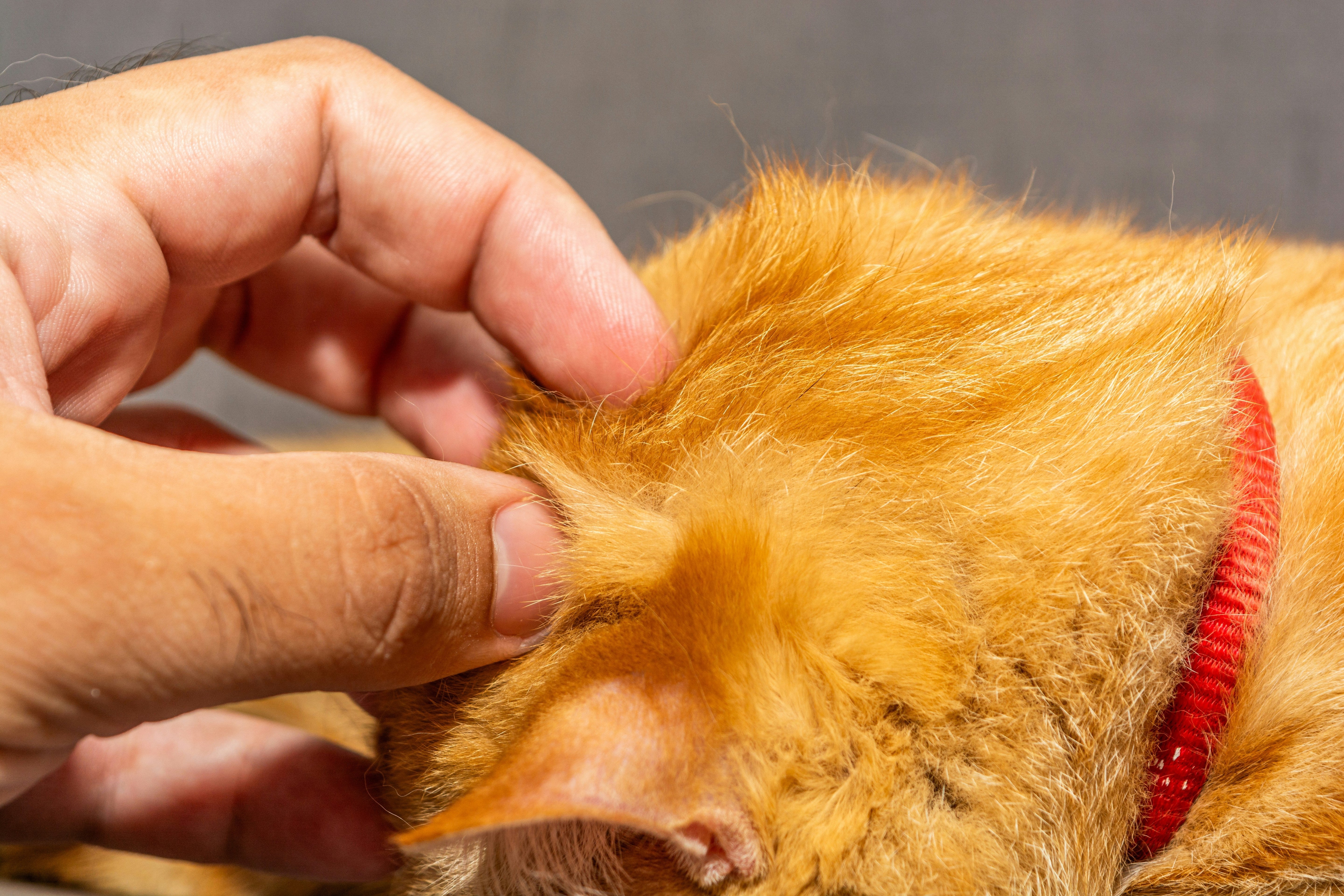
- A tick — usually feels like a small, round bump on the skin. Part the fur and look; tick check every dog after every off-leash walk in tall grass or woods.
- Pale gums or lethargy (especially in puppies or kittens) — can indicate anemia from a heavy flea load. This is an emergency.
A realistic monthly flea and tick routine
- Once a month: Apply the topical on a set date (first of the month is easiest to remember). Mark it on your calendar.
- After every walk in tall grass or woods: Run your hands over your dog and feel for ticks. Check the ears, armpits, groin, and between the toes.
- Weekly: Comb-through with a flea comb during peak season.
- Monthly: Wash pet bedding in hot water. Vacuum carpets and upholstery and empty the bag/canister outside.
- Year-round in southern Canada: Don't stop prevention in October just because the snow flies. Indoor fleas don't care about the weather.
Frequently asked questions
Can I use the same product on my dog and my cat?
No. Always use species-specific products. Most dog flea and tick topicals contain permethrin, which is toxic to cats. The Tickless ultrasonic repeller is one of the very few products safe for both.
My cat is indoor-only. Does she need flea prevention?
Less urgently than an outdoor cat, but still yes during peak season. Fleas hitchhike indoors on shoes, clothing, and other pets. A monthly topical from April to November is a reasonable minimum for indoor cats.
What if I find a tick embedded in my pet?
Use fine-tipped tweezers or a tick remover tool, grasp the tick as close to the skin as possible, and pull straight up with steady pressure. Don't twist. Don't burn it. Don't smother it with Vaseline. Clean the bite site with soap and water. If the tick was attached for more than 24 hours, or you see any symptoms in the following weeks, call your vet.
Do natural products actually work?
Ultrasonic repellers like the Tickless have independent studies showing meaningful tick-bite reduction, and they're a reasonable supplement to a topical. But for a dog walked through tick-heavy woods, or a cat with an active flea allergy, the evidence still favours conventional topical preventives as the primary defense.
How long does it take for a topical to start working?
Fleas begin dying within 2–12 hours of application (depending on the product). Ticks take longer — they typically need to bite before the insecticide kills them, so the key protection is that a dying tick can't transmit disease. Full protection is established within 24–48 hours.
Can I bathe my dog after applying a topical?
Wait at least 24 hours after application before bathing, and avoid harsh shampoos for several days afterward. The active ingredient needs to bind to the skin oils to work properly.
The bottom line
Pick the right product for your pet's species, weight, and environment. Apply it consistently. Check for ticks after every outdoor adventure. Don't cross-use between dogs and cats. And don't wait until you see a problem — in Canada in 2026, the problem starts earlier every year.
PetMax.ca is a Canadian-owned pet supply retailer based in the GTHA. We've been helping pet owners since 1993 and ship across Canada — free shipping on orders over $89. This article is general information, not veterinary advice. If your pet has a suspected parasitic infection or adverse reaction, call your vet.



Share:
The Complete 2026 Guide to Dog & Cat Dental Care: Chews, Water Additives, and What Actually Works
Spring Shedding Survival Guide: Best Deshedding Tools for Canadian Dogs & Cats (2026)