

Published September 2026 · ~7 min read
For two months your pet has had it made: kids home all day, someone always on the couch, walks and play whenever. Then the first Tuesday of September arrives, the house empties by 8:30, and the best part of their day walks out the door. Pets are creatures of routine, and back-to-school week is one of the biggest routine shakeups of their year. A little planning turns it from a hard stop into a smooth handoff. Here’s our team’s playbook.
Why September is genuinely hard on pets
Dogs and cats don’t understand calendars. They understand patterns. When the pattern changes overnight (company all day becomes an empty house; three play sessions become zero), the sudden gap shows up as stress. Dogs are pack animals who read the household’s comings and goings closely, and cats, despite the aloof reputation, are deeply attached to schedule and territory. The good news: most pets adjust within one to two weeks once the new routine becomes the pattern, and everything below speeds that up.
How can I tell if my pet is struggling with the new routine?
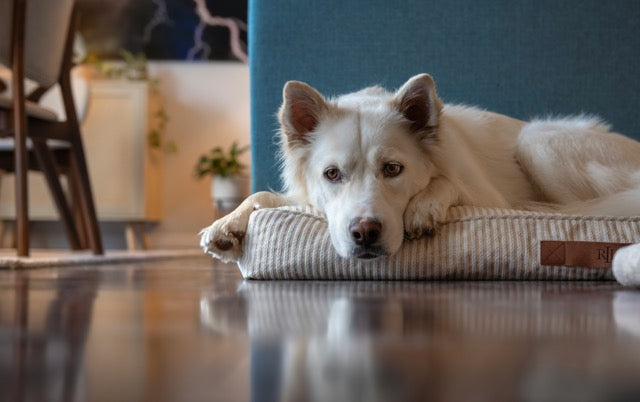
The signs usually show up in the first two weeks of school. In dogs, watch for pacing or whining as the family gets ready to leave, chewing around doors and windows, house-training accidents from an otherwise reliable dog, barking or howling after you go (a neighbour will often tell you), and velcro-dog shadowing when you’re home. In cats, it’s quieter: extra clinginess or extra hiding, over-grooming, changes in appetite, or litter box misses. Mild versions of these are a normal adjustment; if they’re intense or getting worse, skip ahead to the last section.
Start the new schedule before school does
The single most effective move is to phase the change in rather than flipping a switch. A few days before school starts, begin waking, feeding and walking on the school-day clock, and practise short absences: leave for 10 minutes, come back calmly, stretch it to 30, then an hour. Keep departures and returns boring: no long emotional goodbyes, no big excited hellos. Calm comings and goings teach your pet that the door is no big deal. If your dog has learned that shoes-plus-keys means abandonment, pick up your keys and then sit back down a few times a day until the cue stops meaning anything.
A tired pet handles an empty house better
Exercise before the house empties is worth more than exercise after. Shift the main walk to the morning. Even 20 minutes of sniffing and moving takes the edge off the first hours alone, which are the hardest. For cats, run a proper wand-toy hunt before breakfast; a cat who has “caught” something and eaten is wired to groom and sleep, which is exactly how you want the morning to go.
Give the day a job: alone-time enrichment
An empty house is easier when there’s something to do in it. Save a special toy that only comes out when everyone leaves. It flips the association from “they’re gone” to “it’s puzzle time.” A frozen lick mat spread with wet food buys 20–40 calm minutes; a treat-dispenser like the KONG Rewards Wrapz turns part of breakfast into a project; and a loaded Woof Pupsicle lasts even longer. For cats, scatter-feed part of breakfast or hide a few treats around the house before you leave. Our enrichment and puzzle toy roundup has a full rotation’s worth of ideas for both species.
When to add calming support
For pets who stay anxious after the first week or two, calming aids can take the edge off while the routine settles. An Adaptil pheromone diffuser works quietly in the background near your dog’s resting spot, and daily calming supplements like Nutrience Care Calming (a Canadian-made option) or NaturVet Scoopables are easy to add to meals. Start them a few days before you need them, as they build up gradually. Browse the full calming and anxiety relief collection, and see our calming guide for the complete toolkit. These are supports, not fixes, so pair them with the routine work above.
When it’s more than an adjustment
True separation anxiety is different from back-to-school blues: panic that starts within minutes of departure, destruction focused on exits, self-injury, drooling-soaked chins, or howling that lasts hours. That’s not disobedience and it doesn’t train itself out. Talk to your veterinarian, who can rule out medical causes and refer you to a qualified trainer or behaviourist. The earlier you start, the easier it is to turn around.
The bottom line
Phase in the school-day schedule early, keep departures boring, front-load exercise, and give the empty house a job with food-based enrichment. Most pets settle into the new rhythm within a couple of weeks, and if yours doesn’t, calming support and your vet can close the gap. Here’s to a smooth September for everyone, including the four-legged ones staying home.
Want help building an alone-time enrichment kit for your dog or cat? Email our team and tell us about your pet, and we’ll suggest a starter set.
PetMax.ca is a Canadian-owned pet supply retailer based in the GTHA. We’ve been helping pet owners since 1993 and ship across Canada, with free shipping on orders over $89. This article is general information, not veterinary advice. When in doubt about your pet’s health, contact your veterinarian.

Share:
Dog-Friendly Summer in the GTHA: Patios, Beaches & Trails
The Labour Day Long Weekend With Your Dog: One Last Summer Checklist (2026)