

Last updated April 2026 · ~7 min read
Put the back of your hand on the sidewalk. Count to five. If you can't hold it there comfortably — your dog can't walk on it. That's the five-second rule every Hamilton and GTHA dog owner needs to know, and it starts mattering right around now.
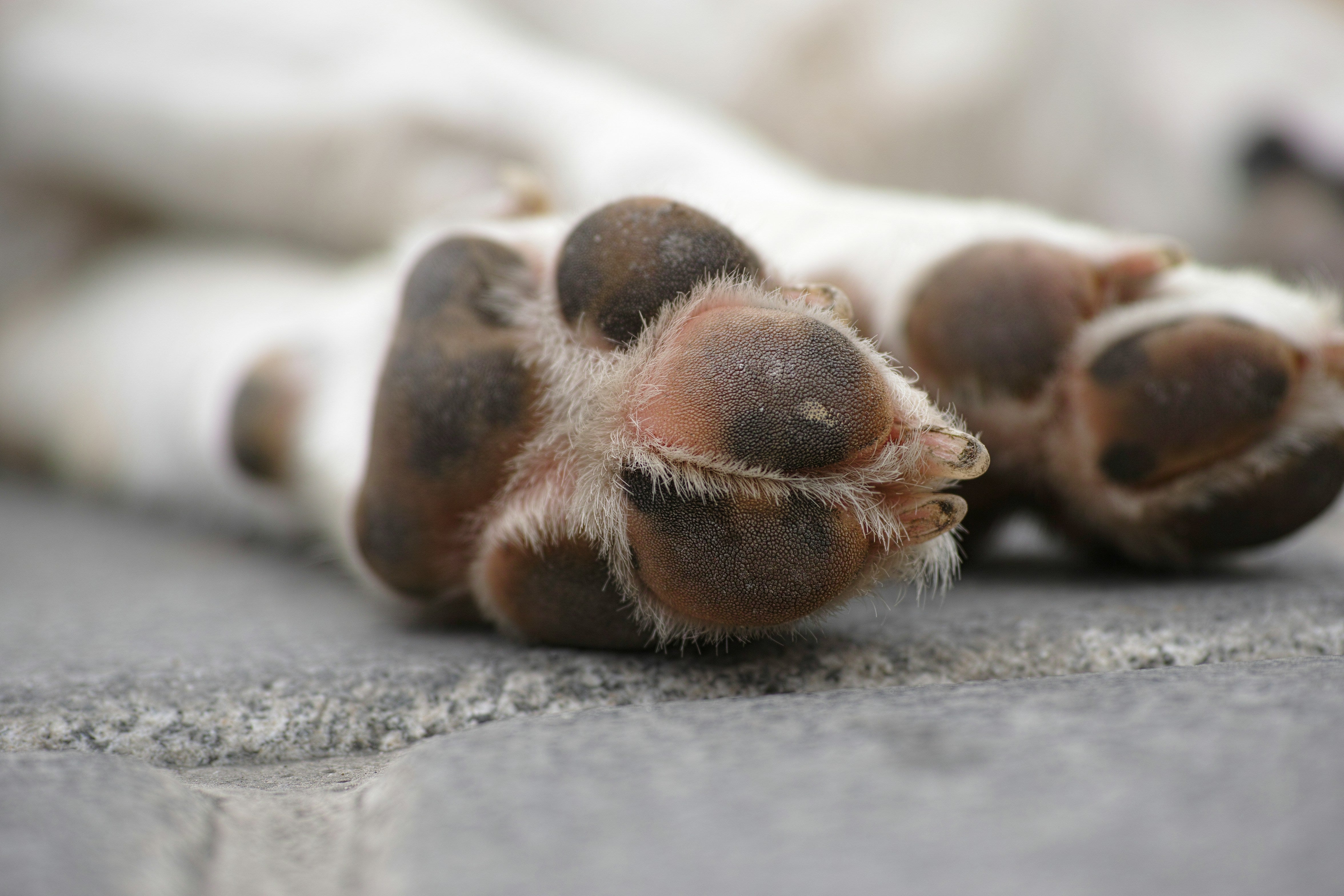
By mid-May in southern Ontario, asphalt in direct sun can reach 50–60°C on an afternoon that feels pleasant to humans. Dog paw pads are tough, but they are not fireproof — burns from hot pavement are one of the most common avoidable summer injuries we see. This is PetMax's 2026 guide to keeping your dog's paws safe through Canadian summer: balms, boots, cooling gear, and the simple rules that matter more than any product.
Why paws need protection (year-round, actually)
Dogs encounter four very different paw hazards across the year, and most owners only think about one:
- Hot pavement (May–September) — asphalt and concrete absorb sunlight and can easily reach 50–60°C. Burns typically happen in the first 60 seconds of contact.
- Rough terrain (year-round, but peak in hiking season) — trails, gravel, crushed stone, and rocky beaches wear down pad tissue and can cause cuts, splits, and abrasions.
- Winter salt and ice (December–March) — road salt and calcium chloride de-icers dry out and chemically burn pads. Ice balls between the toes cause real pain.
- Allergens and irritants (spring/summer) — lawn fertilizers, pesticides, and pool chemicals can cause contact dermatitis between the toes.
The right paw protection strategy depends on what your dog walks on — not just the season.
The five-second rule (read this first)
Before we talk about products, the most important thing you can do on a hot day is the hand test. Place the back of your hand flat on the pavement for five seconds. If it's uncomfortable, do not walk your dog on it. Walk on grass, wait until evening, or skip the walk entirely. No balm or boot fully protects against a 50°C surface — the real fix is timing and route choice.
General rule of thumb for southern Ontario summer: walk before 9 AM or after 7 PM on sunny days above 25°C. In July and August, even morning walks can be risky on dark asphalt.
Paw balms — the daily layer
Paw balms are wax-based protectants you massage into the pads. They form a semi-permeable barrier that shields pads from heat, cold, salt, and rough surfaces while still letting the skin breathe. Apply 10–15 minutes before a walk; reapply every 2–3 days or after baths.
- Musher's Secret Pet Paw Protection Wax — originally developed for sled dogs in sub-Arctic conditions, now the most trusted all-season paw protectant in Canada. Food-grade ingredients, safe if licked, and it works in both winter (against salt and ice) and summer (against hot pavement). Our top pick.
- Dr. Maggie Paw Protector Protective Balm — a Canadian veterinary-formulated balm safe for both dogs and cats. Good option if you have both species in the household.
Dog boots — when balm isn't enough
Balm is great for daily protection, but for genuinely harsh conditions — long hikes on gravel, hot mid-day pavement emergencies, post-surgery foot coverage, or dogs with chronic paw issues — you want actual boots. Boots take some getting used to (the first wearing is usually a comedy routine), but most dogs adapt within a few tries.
All-terrain rubber boots (for rough surfaces)
Structured boots with a treaded sole protect against rough trails, rocky beaches, hot pavement, and ice. They're the most durable option and the most visible (some dogs protest the sensation on first wear).
- Goo-eez All Terrain All Season Dog Boots (Black) and Red — Canadian-made, all-season, with a rubber sole that grips trail surfaces and shields against heat.
- GF Pet Boots for Dogs — All Terrain Black — another Canadian option with a durable sole. Good alternative if the Goo-eez sizes don't fit your dog.
Disposable rubber boots (the emergency option)
If your dog won't tolerate structured boots or you just need a lightweight option for quick protection, Pawz are thin rubber balloons that slip over the paw. They don't provide the same durability as structured boots, but they're almost invisible to the dog and great for post-surgery or short-term use.
- Pawz Dog Boots — single pack, try-before-you-buy option.
- Pawz Dog Boots — Black 12 Pack — bulk pack for ongoing use.
First-time boot tip: Put boots on indoors first, with treats. Let your dog walk around for 5 minutes, then take them off. Repeat daily for a week before trying them outside. The hardest part is the first wear; once your dog realizes the boots don't trap them, most dogs accept them completely.
Cooling gear — for the really hot days
Paw protection is only half the summer safety story. The bigger risk on a 30°C day is actually heatstroke, which kills more Canadian dogs every summer than car accidents. Cooling gear helps dogs regulate temperature when they can't pant enough to keep up.
- GF Pet Cooling Ice Vest — a lightweight vest you soak in cold water; evaporation pulls heat off the dog's chest and back. Great for long summer walks and hot-day patio outings.
- GF Pet Ice Band — a neck/chest cooling band for dogs who won't tolerate a full vest. Sized for smaller dogs and puppies.
Both work on the same principle — wet them, wring them out, put them on, and let evaporation do the cooling.
Shop the full Paw Protection & Summer Safety collection →
The signs of a paw burn (or heatstroke)
Paw burns
- Limping or refusing to walk suddenly
- Constant licking or chewing at paws
- Visibly red, blistered, or darkened pads
- Pads that feel hot to the touch after a walk
- Pieces of pad peeling off (a serious burn)
If you see any of these: bring your dog inside, rinse paws with cool (not ice-cold) water, apply a thin layer of Musher's Secret or veterinary burn ointment, and call your vet. Second-degree pad burns need professional care.
Heatstroke (the real emergency)
- Heavy panting that doesn't slow down when resting
- Bright red or pale gums
- Thick, sticky drool
- Weakness, stumbling, or collapse
- Vomiting or diarrhea
- A body temperature above 40°C (104°F)
Heatstroke is an emergency. Move your dog to shade or air conditioning immediately, offer small amounts of cool (not cold) water, wet the belly and paw pads with cool water, and head straight to the vet. Don't wait to see if it improves — internal organ damage happens fast.
A realistic summer walk routine
- Check the pavement with your hand before every walk. Five seconds, every time.
- Time your walks — before 9 AM or after 7 PM on hot days.
- Apply balm 10–15 minutes before the walk if conditions are rough or hot.
- Carry water and offer it every 15 minutes on longer walks.
- Shade breaks — plan your route to include shade every 10 minutes.
- Watch for warning signs — excessive panting, slow pace, seeking shade unprompted — these mean turn around now.
- Rinse paws after every walk in spring/summer to remove pollen, lawn treatments, and road grit. A quick rinse prevents most contact irritation.
Frequently asked questions
Can I use the same paw balm year-round?
Yes — Musher's Secret in particular is designed to work in both extreme cold and extreme heat. One tub covers you from January ice to July asphalt.
How do I measure my dog for boots?
Trace your dog's paw on paper while they're standing (so you get the full weight-bearing footprint), measure the widest part in centimetres, and match to the manufacturer's sizing chart. Most boot sizing errors come from measuring a paw that isn't bearing weight — dogs splay their pads when they stand.
What about beach trips?
Sand gets dangerously hot in direct sun too — same five-second rule applies. Also rinse paws after beach walks to remove salt and sand from between the toes, and check for cuts from shells or glass.
Is pavement really that hot?
Yes. On a sunny 27°C day, asphalt can reach 50°C. At 32°C, it can hit 62°C — hot enough to cause second-degree burns within 60 seconds. Concrete is slightly cooler than asphalt, but both become dangerous on sunny afternoons.
What about dogs with long hair between the toes?
Long interdigital hair collects debris and can trap heat. Trim it short during summer — it's more comfortable for the dog and makes it easier to see paw injuries.
The bottom line
Keep a tub of Musher's Secret by the door, learn the five-second rule, walk early or late on hot days, and have a pair of boots on hand for rough trails or emergencies. Add a cooling vest for dogs who struggle in heat. Those four things will cover 95% of Canadian summer paw-safety situations.
PetMax.ca is a Canadian-owned pet supply retailer based in the GTHA. We've been helping pet owners since 1993 and ship across Canada — free shipping on orders over $89. This article is general information, not veterinary advice. If your dog has a suspected paw burn or heatstroke, call your vet immediately.
Share:
Calming Solutions for Anxious Dogs & Cats: Thunderstorms, Fireworks & Separation Anxiety (2026 Canada Guide)
The Best Summer Cooling Gear for Pets of 2026 (Canada Guide)