

Published July 2026 · ~7 min read
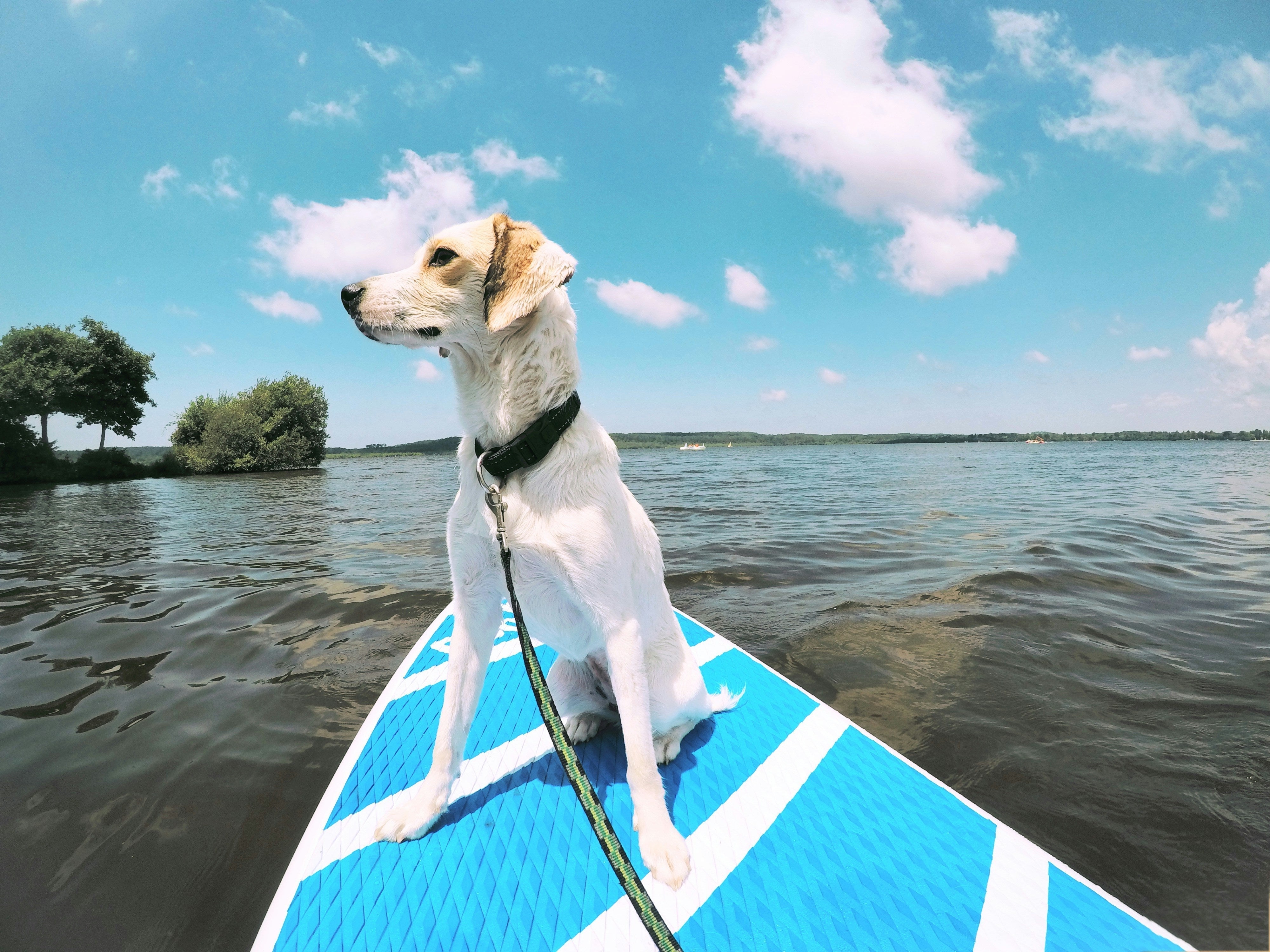
For a lot of Canadian dogs, summer is the water — the lake at the cottage, a river on the hike, the kiddie pool in the backyard. It’s wonderful exercise and a brilliant way to cool off on a hot day. But water also carries a few real risks that are easy to miss until you’re in one, and most of them are preventable with a little planning. This is our guide to keeping your dog safe in and around the water all season.
Not every dog is a natural swimmer
The idea that all dogs can swim is a myth. Some paddle instinctively; others sink, panic, or tire far faster than their enthusiasm suggests. Breeds with short legs and heavy, deep chests — bulldogs, boxers, dachshunds — and flat-faced (brachycephalic) dogs like pugs struggle to keep their airways above water. Puppies, senior dogs and any dog new to swimming should be treated as beginners.
Introduce water gradually and on your dog’s terms. Start in shallow, calm water where they can touch the bottom, let them wade at their own pace, and never throw a dog in to “teach” them — it teaches fear, not swimming. Support their belly the first few times so they learn to lift their back end and paddle level rather than vertically.
When a life jacket matters
A canine life jacket isn’t just for dogs who can’t swim. It’s genuinely worth it for any dog on a boat, kayak or paddleboard; for weak or beginner swimmers; for seniors and short-nosed breeds; and for strong swimmers heading into open water where a current, cold or plain exhaustion can turn a fun swim into trouble. A good jacket keeps a tired dog afloat, keeps their head up, and the grab handle on top lets you lift them out of the water or back into a boat in one motion.
Look for bright colour, reflective trim, a snug-but-adjustable fit and a sturdy top handle. Our RC Dog Tidal Life Vest ticks those boxes and is made by a Canadian brand that knows our water. Have your dog wear it on dry land first so it’s familiar before the first swim.
Blue-green algae: the summer hazard to know
If you remember one thing from this guide, make it this. Blue-green algae (cyanobacteria) blooms on warm, still, nutrient-rich water — ponds and the calm edges of lakes — and it turns up on Ontario and Quebec lakes every summer, usually from mid-summer into fall. Some blooms produce toxins that can make a dog seriously ill very quickly, and dogs are especially at risk because they’ll drink the water and then lick it off their coat.
A bloom often looks like pea soup, spilled paint, or a blue-green, turquoise or greenish scum collecting along the shoreline and downwind edges. When in doubt, stay out — you cannot reliably tell a toxic bloom from a harmless one by looking, so treat any scummy, discoloured or foul-smelling water as off-limits for drinking and swimming. If your dog does get into suspect water, rinse them with clean water right away, don’t let them lick their coat, and call your vet or an emergency clinic immediately if you see vomiting, diarrhea, drooling, weakness, tremors or collapse. This is a true emergency — minutes matter.
Pools, lakes and rivers — each has its own rules
Backyard pools: teach your dog where the steps or exit ramp are and practise using them, because a dog who falls in and can’t find the way out is the most common pool tragedy. Fence or cover the pool when it’s not supervised, and rinse chlorine off afterward so it doesn’t irritate skin and eyes.
Lakes: watch for sudden drop-offs, boat traffic and that blue-green scum. Bring your own fresh water so your dog isn’t tempted to drink the lake.
Rivers: current is deceptively strong, and cold water can cause a gasp reflex and fast fatigue. Keep beginner and small dogs out of moving water, and use a life jacket if you’re near any current.
Two quieter risks: over-drinking and ear infections
Dogs who repeatedly retrieve from the water or bite at waves can swallow a surprising amount, and in rare cases too much water too fast leads to water intoxication. Give hard-swimming, ball-obsessed dogs regular breaks rather than an endless fetch session.
Floppy-eared breeds are prone to ear infections in summer because trapped water is the perfect setup for one. After every swim, dry the ears gently with a towel or cotton pad, and if your dog is a frequent swimmer, ask your vet about a drying ear rinse. A quick towel-off, an ear dry and a rinse of the coat is the ideal end to any water day.
Pack a simple water-day kit
- A life jacket for boats, beginners and open water.
- Fresh water and a collapsible bowl so your dog never has to drink from the lake.
- A towel for drying the coat and ears afterward.
- Shade and rest breaks — swimming is hard work, and a hot dog on a dock is still a hot dog.
The bottom line
Water is one of the best things you can share with your dog in a Canadian summer — introduce it gently, respect your dog’s swimming ability, use a life jacket when it counts, and keep everyone out of any water that looks scummy or discoloured. Do that, and the lake stays the highlight of the season.
PetMax.ca is a Canadian-owned pet supply retailer based in the GTHA. We’ve been helping pet owners since 1993 and ship across Canada — free shipping on orders over $89. This article is general information, not veterinary advice. When in doubt about your pet’s health, contact your veterinarian.


Share:
Keeping Pets Calm Through Canada Day Fireworks (2026 Guide)
The Best Beach & Lake Day Gear for Dogs of 2026 (Canada Guide)