

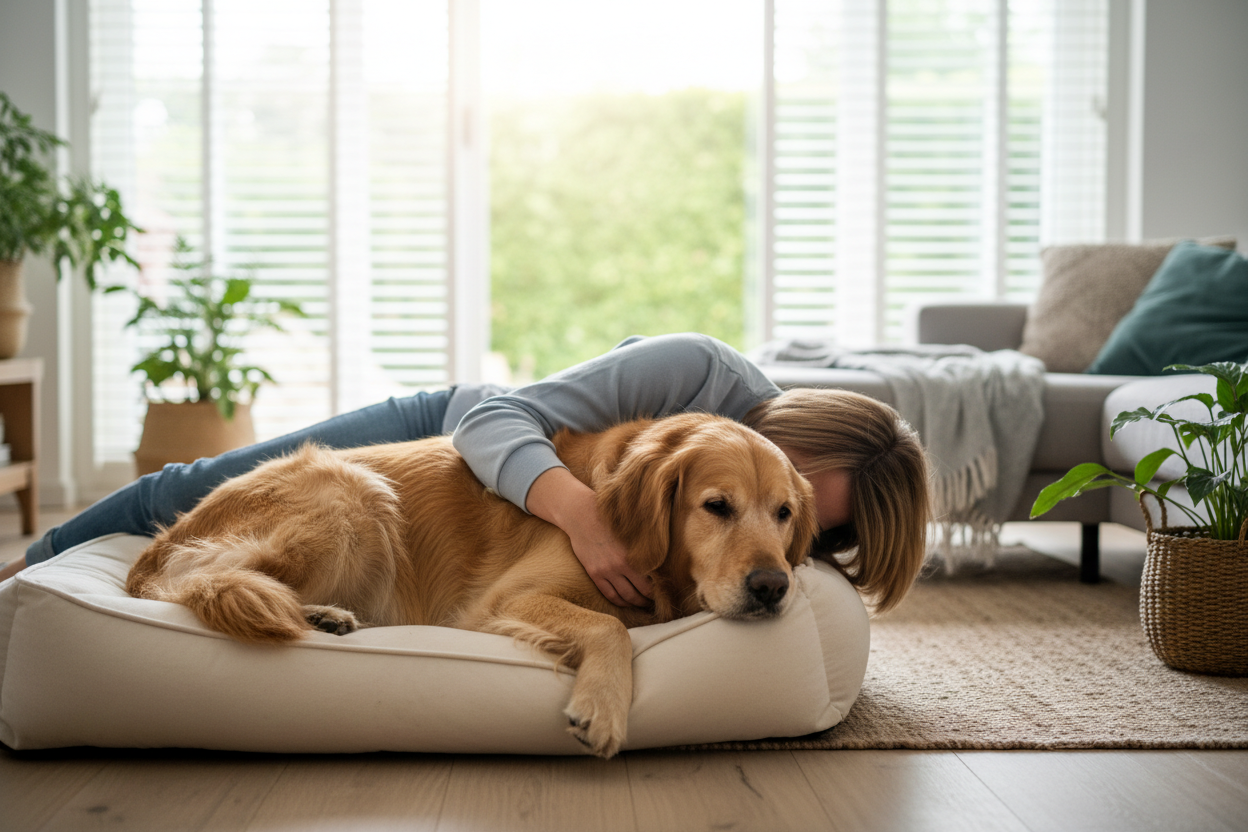
Tous les propriétaires de chiens ont déjà été confrontés à cette situation : votre compagnon à quatre pattes souffre de maux d'estomac et vous vous demandez comment l'aider à se sentir mieux rapidement. Bien que la diarrhée soit l'un des problèmes de santé les plus courants chez les chiens, savoir comment réagir peut faire toute la différence pour le confort et le rétablissement de votre animal. Dans ce guide, nous vous présentons cinq stratégies pratiques, approuvées par des vétérinaires, pour traiter la diarrhée de votre chien à la maison, ainsi que les signes importants indiquant qu'il est temps d'appeler votre vétérinaire.
Comprendre pourquoi les chiens ont la diarrhée
Avant de passer aux options de traitement, il est utile de comprendre ce qui provoque des troubles digestifs chez le chien. Les déclencheurs courants incluent l'indiscrétion alimentaire (manger ce qu'il ne faut pas), des changements soudains de régime alimentaire, le stress, les parasites, les infections bactériennes ou les sensibilités alimentaires. Si une diarrhée légère et occasionnelle se résorbe souvent d'elle-même, les cas persistants ou graves nécessitent une attention professionnelle.

1. Offrez une pause au système digestif de votre chien
L'une des premières étapes les plus efficaces pour traiter la diarrhée du chien à la maison est une courte période de jeûne. Pour les chiens adultes, suspendre l'alimentation pendant 12 à 24 heures permet au tractus gastro-intestinal de se reposer et de récupérer. Cependant, assurez-vous toujours que votre chien a accès à de l'eau fraîche et propre pour éviter la déshydratation.
Important : Les chiots, les chiens âgés et les chiens souffrant de problèmes de santé sous-jacents ne doivent pas jeûner sans avis vétérinaire. Si votre chien est très jeune, âgé, ou s'il est diabétique ou souffre d'autres problèmes médicaux, consultez votre vétérinaire avant de supprimer son alimentation.
Pendant cette période de jeûne, surveillez attentivement votre chien pour détecter tout signe de déshydratation, notamment des gencives sèches, des yeux enfoncés ou une perte d'élasticité de la peau.
2. Introduisez un régime fade et facile à digérer
Après la période de jeûne, réintroduisez progressivement la nourriture en utilisant un régime fade, doux pour l'estomac de votre chien. La combinaison classique est du poulet bouilli nature (sans peau, sans os) et du riz blanc dans un ratio de 1:2. Ce repas simple fournit des protéines et des glucides faciles à digérer sans irriter l'intestin.

Directives pour le régime fade :
- Faites cuire le poulet soigneusement et retirez toute la peau et les os
- Utilisez du riz blanc nature (pas de riz complet, qui est plus difficile à digérer)
- Évitez d'ajouter des assaisonnements, de l'huile ou du beurre
- Servez de petites portions toutes les 3-4 heures plutôt qu'un seul gros repas
- Poursuivez pendant 2 à 3 jours avant de revenir progressivement à une nourriture normale
D'autres sources de protéines fades incluent la dinde bouillie, le bœuf haché maigre (égoutté) ou du fromage blanc nature. Vous pouvez également envisager une nourriture pour chien de haute qualité et facile à digérer, formulée pour les estomacs sensibles, une fois que votre chien est prêt à effectuer la transition.
🐾 Produits recommandés par les vétérinaires pour les troubles digestifs du chien
Vous recherchez la nourriture idéale pour favoriser le rétablissement de votre chien ? Découvrez notre sélection de formules de soins digestifs, de compléments probiotiques et d'aliments pour estomacs sensibles, notamment Royal Canin Digestive Care, les compléments à la citrouille Fruitables, et bien plus encore.
Acheter des produits de soins digestifs →3. Gardez votre chien hydraté
La diarrhée peut rapidement entraîner une déshydratation, ce qui est particulièrement dangereux pour les chiens. Veiller à ce que votre animal reste correctement hydraté est essentiel pendant sa convalescence.

Conseils d'hydratation :
- Assurez un accès constant à de l'eau fraîche et propre
- Offrez des glaçons comme friandise si votre chien hésite à boire
- Envisagez un bouillon de poulet ou d'os à faible teneur en sodium (refroidi, sans oignon ni ail)
- Surveillez la consommation d'eau — si votre chien refuse de boire, contactez votre vétérinaire
- Surveillez les signes de déshydratation : léthargie, nez sec, gencives collantes, diminution de l'élasticité de la peau
Si votre chien vomit en plus d'avoir la diarrhée, de petites gorgées d'eau fréquentes sont préférables à l'absorption de grandes quantités d'un coup.
4. Ajoutez un soutien digestif avec des probiotiques et des suppléments
Soutenir la santé intestinale de votre chien peut accélérer son rétablissement et prévenir de futurs épisodes. Les probiotiques introduisent des bactéries bénéfiques qui aident à rétablir l'équilibre du système digestif, tandis que certains suppléments pour chiens peuvent apporter un soutien digestif supplémentaire.
Suppléments bénéfiques :
- Probiotiques : Recherchez des formules spécifiques pour chiens contenant plusieurs souches bactériennes
- Citrouille : La purée de citrouille en conserve nature (pas de garniture pour tarte) est riche en fibres et peut aider à raffermir les selles
- Enzymes digestives : Peuvent aider les chiens souffrant de problèmes digestifs chroniques
- Orme rouge : Une plante naturelle qui apaise le tractus digestif
Choisissez toujours des suppléments spécifiquement formulés pour les chiens et suivez attentivement les instructions de dosage. Des produits de soins de santé pour chiens de qualité peuvent faire une différence significative dans le bien-être digestif de votre animal.
Astuce de pro : Une fois que votre chien est rétabli, envisagez d'incorporer des friandises pour chiens digestes qui soutiennent la santé intestinale durable plutôt que des friandises pouvant déclencher une sensibilité.
5. Transition graduelle vers une alimentation normale
Une fois que les selles de votre chien commencent à se raffermir (généralement après 2-3 jours de régime fade), il est temps de réintroduire lentement sa nourriture habituelle. Précipiter ce processus peut déclencher un nouvel épisode de diarrhée.

Calendrier de transition :
- Jours 1-2 : 75% régime fade, 25% nourriture normale
- Jours 3-4 : 50% régime fade, 50% nourriture normale
- Jours 5-6 : 25% régime fade, 75% nourriture normale
- Jour 7 : 100% nourriture normale
Si la diarrhée revient pendant la transition, ralentissez le processus et maintenez le ratio actuel pendant un jour ou deux de plus. Demandez-vous si la nourriture normale de votre chien pourrait contribuer à ses problèmes digestifs — certains chiens bénéficient d'un passage à une formule plus digeste ou à une nourriture pour chien à ingrédients limités conçue pour les estomacs sensibles.
Quand appeler votre vétérinaire
Bien que de nombreux cas de diarrhée chez le chien se résolvent avec des soins à domicile, certains symptômes nécessitent une attention vétérinaire immédiate :
Consultez un vétérinaire si votre chien présente :
- Une diarrhée durant plus de 24-48 heures
- Du sang dans les selles (noires, goudronneuses ou rouge vif)
- Des vomissements accompagnés de diarrhée
- Des signes de douleur ou d'inconfort abdominal
- Léthargie ou faiblesse
- Perte d'appétit pendant plus de 24 heures
- Fièvre
- Symptômes de déshydratation
- Ingestion connue de toxines ou d'objets étrangers
Les chiots, les chiens âgés et les chiens souffrant de problèmes de santé préexistants doivent être examinés plus rapidement, car ils sont plus vulnérables aux complications liées à la diarrhée.
Prévention : Soutenir la santé digestive à long terme
Une fois que votre chien est rétabli, concentrez-vous sur des stratégies de prévention pour minimiser les futurs troubles digestifs :
- Maintenez une alimentation cohérente : Évitez les changements alimentaires soudains ; transitionnez progressivement sur 7-10 jours
- Choisissez une nutrition de haute qualité : Une nourriture pour chien de qualité supérieure avec des ingrédients sains soutient la santé digestive
- Limitez les restes de table : La nourriture humaine peut provoquer des maux d'estomac
- Assurez un exercice régulier : L'activité physique favorise une digestion saine
- Gérez le stress : L'anxiété peut contribuer aux troubles digestifs
- Poursuivez la prévention parasitaire : Vermifugation régulière et contrôle des puces/tiques
- Surveillez ce qu'il mange : Empêchez l'accès aux poubelles, aux plantes toxiques et aux objets étrangers
Pour les chiens sujets à une sensibilité digestive, envisagez des formules spécialisées comme de la nourriture pour chien âgé ou de la nourriture pour chien adulte conçue pour une fonction digestive optimale.
Points clés : Liste de contrôle pour le traitement de la diarrhée du chien
✅ Jeûne de 12 à 24 heures (chiens adultes seulement, avec l'approbation du vétérinaire)
✅ Fournir un accès constant à de l'eau fraîche
✅ Introduire un régime fade (poulet bouilli et riz)
✅ Donner des repas petits et fréquents
✅ Envisager des probiotiques et des suppléments digestifs
✅ Transition progressive vers une nourriture normale sur 7 jours
✅ Surveiller les signes d'alerte nécessitant l'avis d'un vétérinaire
✅ Se concentrer sur la prévention avec une nutrition de qualité et une alimentation cohérente
Questions fréquemment posées
Combien de temps dure généralement la diarrhée chez le chien ?
Les cas légers se résolvent généralement en 24-48 heures avec des soins à domicile appropriés. Si la diarrhée persiste au-delà de 48 heures, consultez votre vétérinaire.
Puis-je donner à mon chien des médicaments antidiarrhéiques humains ?
Ne donnez jamais de médicaments humains à votre chien sans avis vétérinaire. Certains médicaments en vente libre peuvent être toxiques pour les chiens ou masquer des pathologies sous-jacentes graves.
La citrouille est-elle bonne pour les chiens souffrant de diarrhée ?
Oui, la purée de citrouille en conserve nature (pas de garniture pour tarte) peut aider à raffermir les selles grâce à sa teneur en fibres. Commencez avec 1 à 2 cuillères à soupe pour les petits chiens, jusqu'à 4 cuillères à soupe pour les grands chiens.
Dois-je changer définitivement la nourriture de mon chien après une diarrhée ?
Pas nécessairement. Cependant, si votre chien souffre fréquemment de troubles digestifs, discutez des sensibilités alimentaires avec votre vétérinaire et envisagez une formule à ingrédients limités ou pour estomacs sensibles.
Le stress peut-il causer la diarrhée chez le chien ?
Absolument. Les changements de routine, les nouveaux environnements, l'anxiété de séparation ou d'autres facteurs de stress peuvent déclencher des troubles digestifs chez les chiens sensibles.
Réflexions finales
Traiter la diarrhée d'un chien à la maison est souvent simple lorsque l'on connaît les bonnes étapes à suivre. En donnant du repos au système digestif de votre chien, en lui fournissant un régime fade, en assurant une hydratation adéquate et en soutenant sa santé intestinale avec des suppléments de qualité, vous pouvez aider votre compagnon à se rétablir rapidement et confortablement. N'oubliez pas que l'alimentation globale de votre chien joue un rôle crucial dans sa santé digestive ; investir dans une nourriture de qualité supérieure et facile à digérer ainsi que dans des produits de santé appropriés pose les bases d'un bien-être durable.
Si les symptômes persistent ou s'aggravent, n'hésitez pas à contacter votre vétérinaire. La santé et le confort de votre chien valent bien la tranquillité d'esprit qu'apporte une aide professionnelle.
Partager:
10 conseils pour intégrer votre chien à vos résolutions du Nouvel An
Jeu interactif de promenade pour chien : testez vos compétences et amusez-vous avec votre chiot virtuel